
Drums


fig. A;   fig. B;   fig. C;
Painting              ; Framing              ; Printing


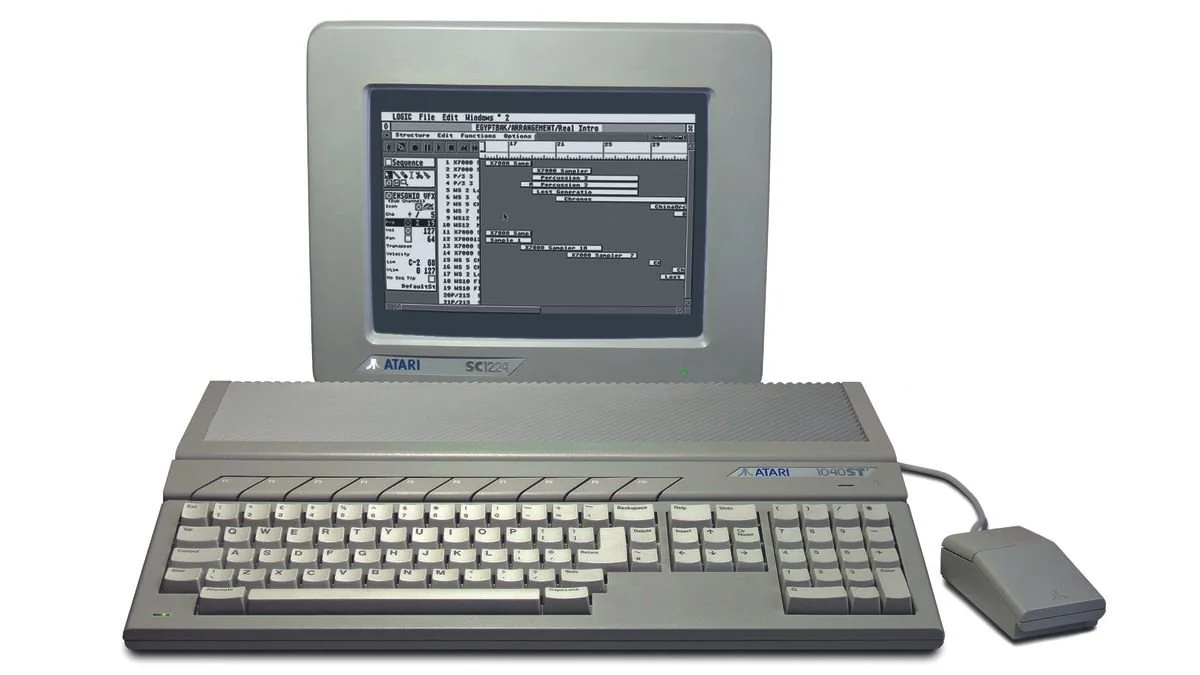
Above are three central pieces of equipment relating to the composition, organization and facilitation of percussion sequences and sounds. Figure A; An early home computer, for which music software was written and sold - I, like a few other music hobbyists, have seen in it and other antiquated devices a superiority through its inability to trip over itself like seeminly all contemporary solutions do. It doesn't nag you to subscribe to a paid monthly service; it doesn't apply an obnoxious cell shaded user interface skin that you have to take fifteen seconds to find the preferences menu and disable in the best case scenario. It isn't the most budget friendly option (anymore, though at some point in production history, it may have been), but if you are so principled, you can depend on it and the soundness of this block to propel yourself off of justifies its incorporation. It deals in MIDI, as it has no onboard sound facilities - this is like some metaphor for how the absence of some senses amplifies the acuity of others; its interface being solely MIDI gives it some authority of being the highest sequencing solution. When you experiment with other non-PC sequencer articles, you might appreciate some characters about the others (thinking about MSQ-700 or MC-500) but you'll likely walk away with a reinforced acknowledgement of the Atari-in-conjunciton-with-Cubase being the epitome of wherewithal in the department.

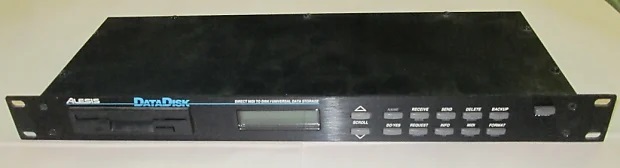
When the composition has been laid out satisfactorily, it is important to save your work; this is something which can be a point of difficulty when dealing with articles of antiquity like the ATARI; undesirably, my ACSI floppy drive is not keen on 'writing' data so much as it is reading it, so I bypass (for the time) the discipline of saving the project onto a disk for the purposes of future reference/expansion using the Atari, instead jumping straight to utilizing a more global tool for the encapsulation of MIDI data - the obscure Alesis Datadisk (fig. B). I have a couple units for redundancy, but I feel that having the ability to use multiple concurrently opens high doors through which abstracted juxtapositions of data of performance and secretarial administrations can be jointed and preserved, possibly repropagated again to good or bad effect.

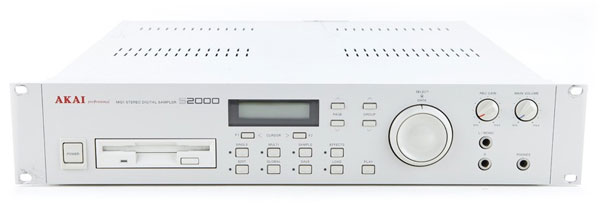
No doubt an equally integral part of this simplified trifecta is the point at which the inaudible data gets converted into sonics; curated orders of brief sounds on any member of a family of devices suffixed "-lers"; you have SAMPLERS (fig. C) which offer the most individuality and power, as unless they're bundled or in proximity to commercial or undertaken banks of a colleague's action in recording stuff into the input of one, it's on you to route sounds from whatever source into one of these devices. After one or a score of materials have been captured and allocated to registers within the MIDI strainer links, you can begin interfacing with them using such utilities as the ones I mentioned before. Also, back to that etimological aside, you have a tangential family of devices called ROMPLERS which have sounds on them already, potentially with facilities for editing their addresses so that you can have a sense of logic with the tracks and registers via which you'll be moving or plotting firstly the MIDI blips (these are bound to be cumbersome if present at all - an argument in favor of SAMPLERS to be sure). Romplers aren't all bad - in fact, they're exempliary sources for sounds to populate a SAMPLER floppy with. Drum machines are ROMPLERS, as their sounds are pre-loaded and practically ineditable. That wouldn't be nice if (child)you or people widely had the ability to just erase the resource which is the selling point of these things. So, another layer of appreciability for SAMPLERS relating to this process, is that you can nearly ape the tenets of a language, and formulate your own. While somewhat nuanced, those which have at least an experiential acquaintance under their belt with a piano roll and whatever Drum VST will be able to comprehend that there is a general manner in which you adhere to when plotting hits; the kick drums are usually the lowest rung, then the snare, then the closed hihat, then the open hihat, then the ride cymbal, then another ride cymbal, then a crash cymbal, then another crash cymbal, then a floor/lo tom, then a second-lowest tom, then a third-lowest tom. This is a linguistic frame that doesn't serve you to be upset - so, in leveraging SAMPLERS, you can do what you can to ensure the preservation of this foundation. I did drift a bit in this area, from having a phase where I put the closed hihat on the lowest rung because I thought it made logical sense to have the count in (which, if not given to "sticks" or a robotic boop tone, both of which requiring additional provisions at the creation of every library of this type) be the lowest rung, and as closed hihat made the most sense to use, for its scarcity in the music itself as well as its brevity and purely transient body, why not put it at the bottom. Well, I have since discontinued this ethic, and I have to do some maneuvering when I load up a disk made during that era (not eagerly, but it is an editable thing) - another thing I've taken to doing differently is using the C3 octave instead of C2; the ergonomy of Cockos' Reaper piano roll imparted a preference for the C2 register, but since becoming a sycophantic Atari user, and having to wheellessly navigate to the from zero invisible(buried) C2 register every time I open the EDIT pane, something I'm bound to do somewhere close to thirty to a hundred times over the course of "programming" a song (haha, that word feels a little rich to use for describing the act of monkeying around with griddable bloops), I've gotten sick of the unnecessary exertion. C3 from now on, as its immediately actionable upon opening the EDIT window each time.

Godflesh (Industrial Metal)
; Sample of Godflesh and the Alesis HR16.
; approximation of 'Godflesh' drum machine instrumentation.
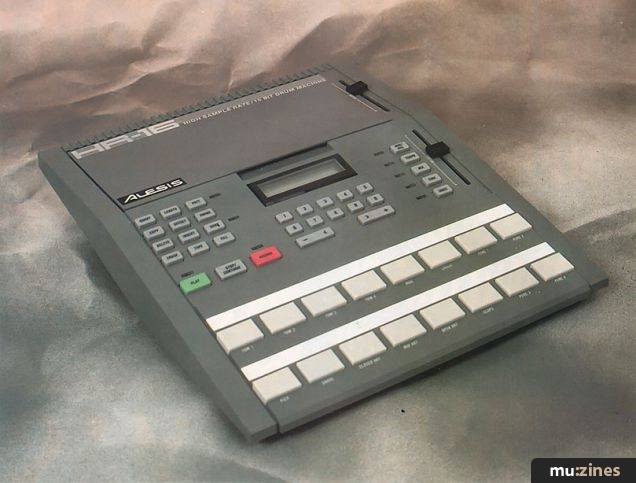
The Alesis HR-16 is a 1988 drum machine utilized famously by Godflesh.


Godflesh (Industrial Metal)
; Sample of Godflesh and the Alesis SR16.
; approximation of 'Godflesh' drum machine instrumentation (SR16; 1991-1995).
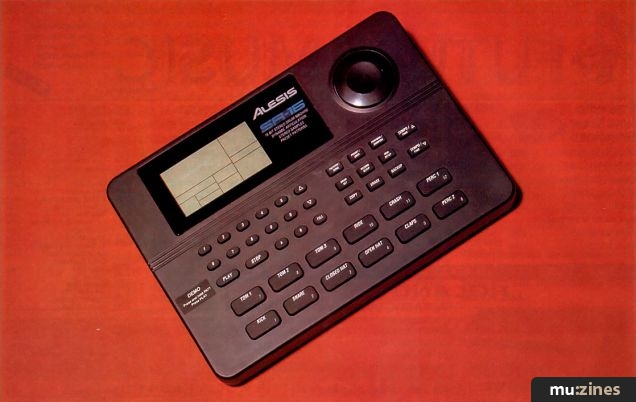
The Alesis SR-16 is a 1990 drum machine utilized by Godflesh - though they are typically associated with the predecessorial HR16.


Pitchshifter (Industrial Metal)
; Sample of Pitchshifter and the Alesis HR16B.
; approximation of 'Pitchshifter' drum machine instrumentation.
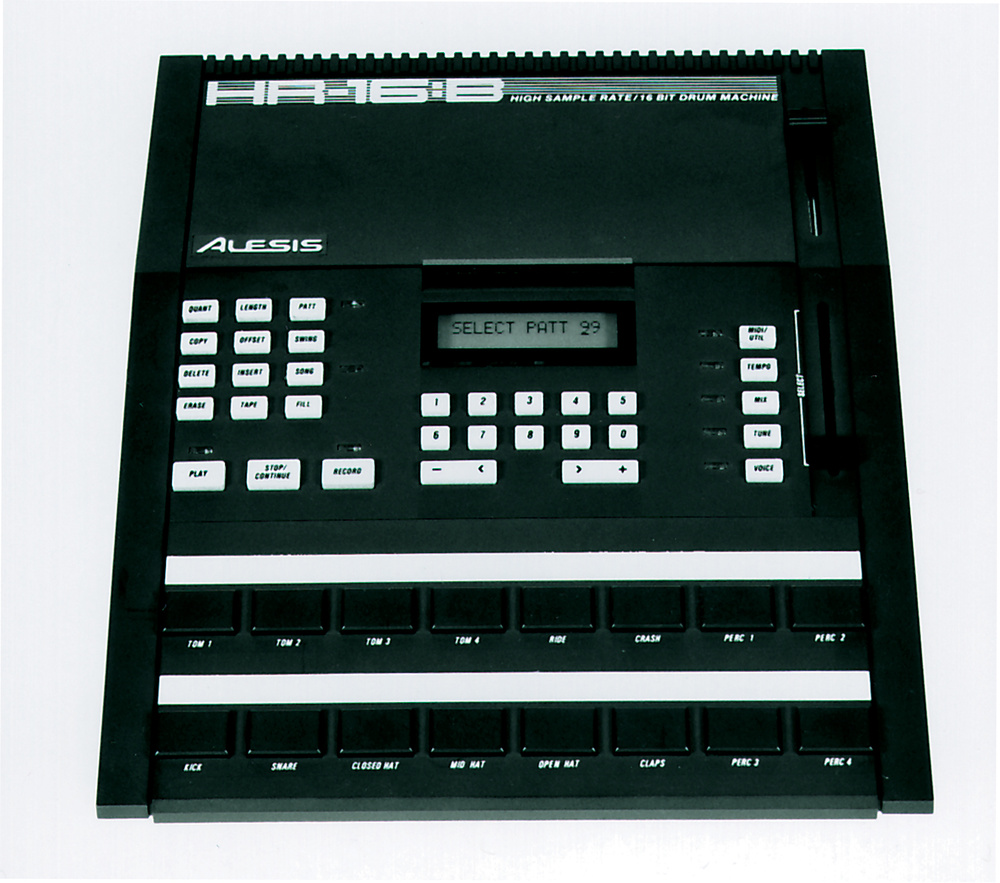
The Alesis HR-16B is a 1989 drum machine, a slightly less prevelant version of the HR-16.


Mortician (Brutal Death Metal)
; Sample of Godflesh and the Boss DR550 Mk2.
; approximation of 'Mortician' drum machine instrumentation.
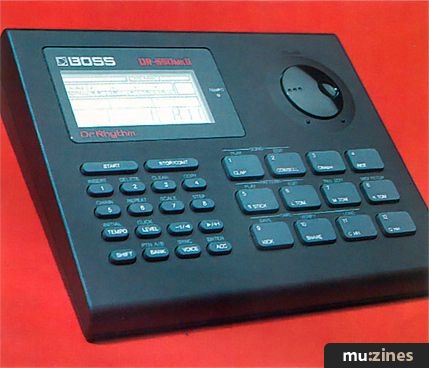
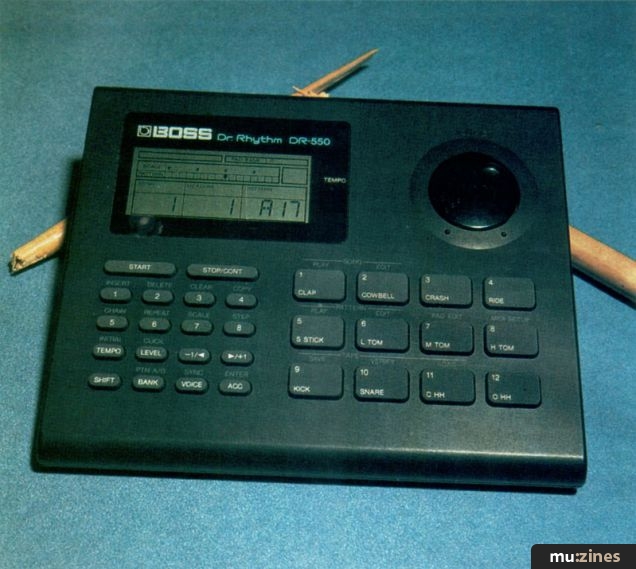
The Boss DR550 MkII is a 1992 drum machine utilized famously by Mortician.


Ministry (EBM / Industrial Rock / Industrial Metal)
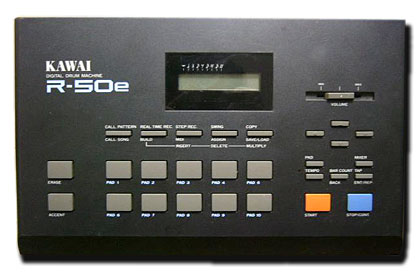
; Sample of Ministry and the Kawai R50e.
; approximation of 'Ministry' drum machine instrumentation.
The Kawai R50e is a 1987 drum machine utilized famously by Ministry.


Tabletop units;


Rack units;


Guitar Center, 2019
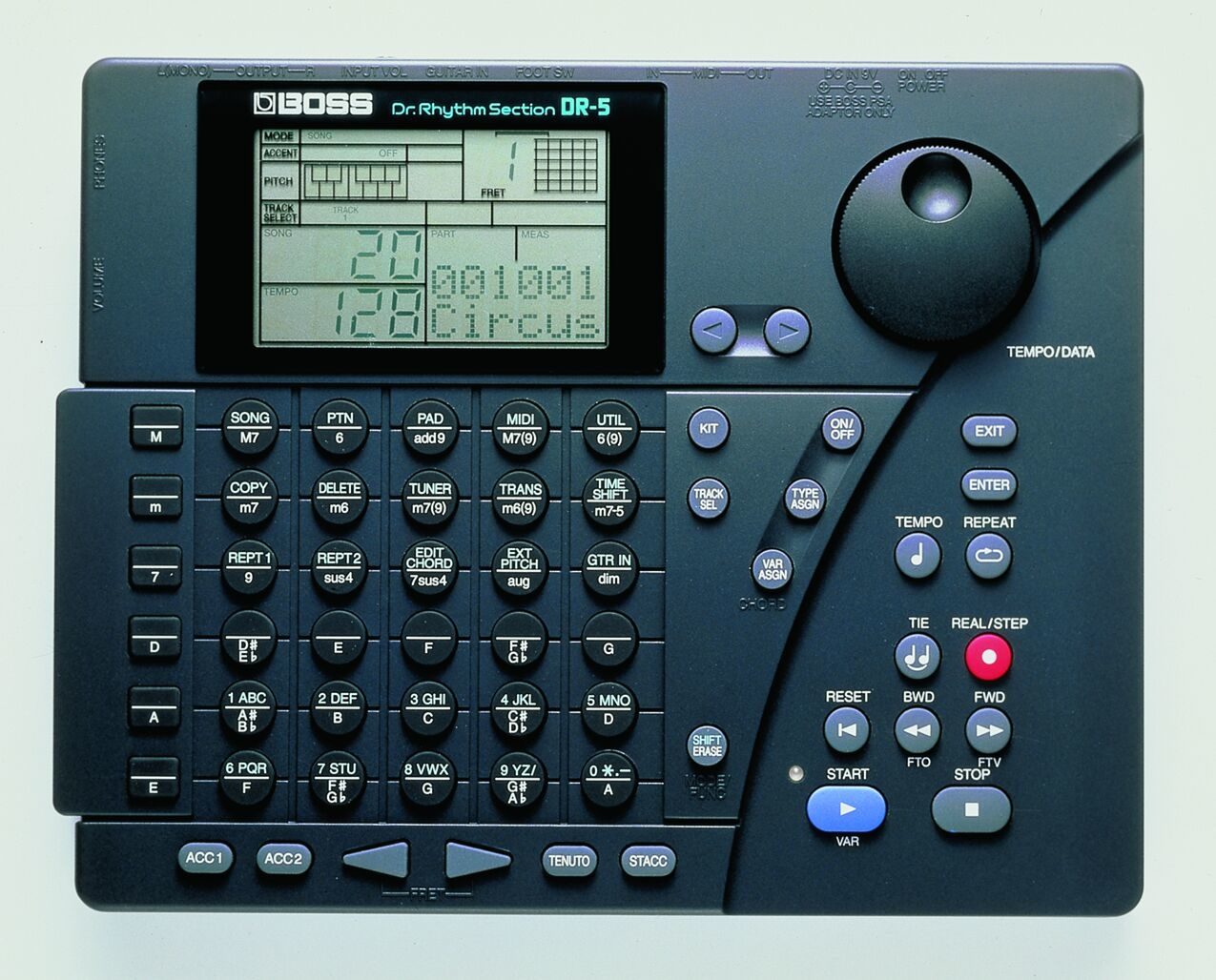
The hardware drum machine which started me on my studio quest. The most noteworthy project I used this machine in was [Crocodylinae], beginning in October 2021 once I had retired the exported mixdown stretching technique with Reaper and RhythmRascal. I had obtained this unit in September 2019, had nominal fun with it, and relegated it to storage in holey buckets and outright long term loans to my buddy David throughout 2020 and 2021. In 2020 however, I utilized it to make intense jackhammer gorenoise in [Abecedarian Esophagogastroduodenoscopy], and a little later, in 2022, I finally developed some appreciation for appliances like the Alesis above software sequencers.

Music Go Round website (www.musicgoround.com), August 2022
I vividly remember waiting for a pizza in the tiny lobby of the Camp Bowie West Domino's in the nighttime hours, scrolling reddit. I was a large proponent of Memphis style crunk at the time especially, and I was following the phonk or memphisrap subreddit. I came across a post on the subreddit (this is in June 2022) which inquired about articles used by the producers associated with memphis style hip hop - the DR5 was mentioned and spoken highly about, and from that point onward I was intent to score one.

www.ebay.com, November 2022
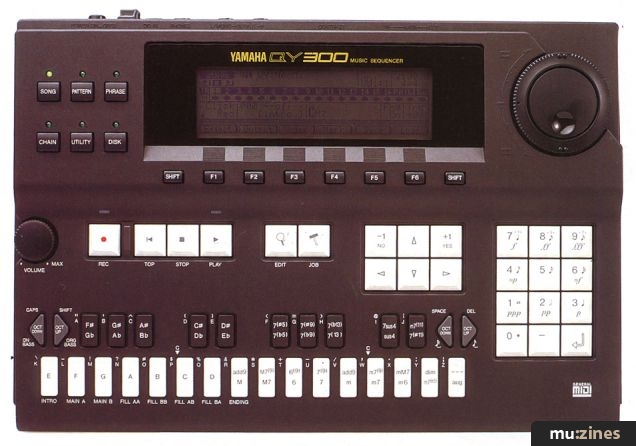
Its difficult to believe I'd already had a job for a year at the point I ordered the Yamaha QY300 from a japanese studio electronics vendor (likely DigitechSound). It was at a time that I was beginning extreme isolationism from the scene of DFW people I'd become acquainted with in 2021 and earlier that year - when [Crocodylinae] stagnated and I left along with its cofounder Cameron, I was really internally self-conscious. I failed to deliver production on this pretty cool album; the personnel was becoming a thorn in my side, as well as the greater effort's. But in the fallout and stewing of emotions, I was overcome with energy that I poured into a project called [Antitank] with David, and another project called [Forensicist] which was a name that I had conceived of at a point in time when I was really into pathological goregrind as a genre, and Pathologist (band). Colleague Daelen and I had talked long about doing something with that project, and in a flurry of a week, I wrote sixteen minutes of material for it. The common thread across Antitank's twenty five minutes of material and Forensicist was the use of the QY300, which I was leveraging, likely interfacing with directly as a sound module through the Tascam US1800's MIDI out.

www.ebay.com, November 2023
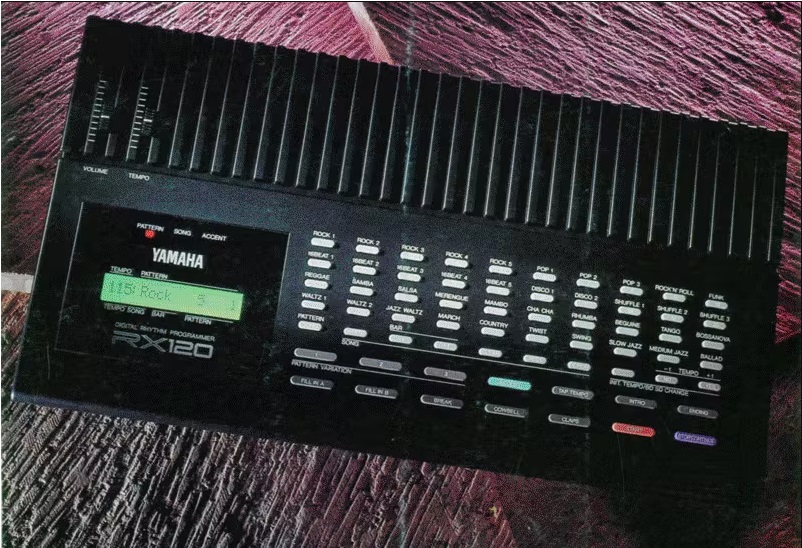
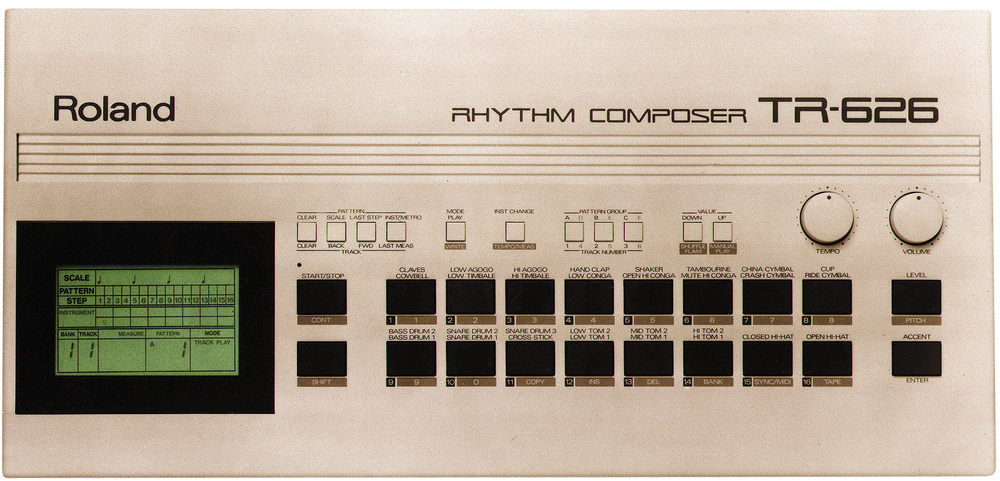
For $80 after shipping, this machine isn't a bad deal. Its a sterile 1980s ROMpler with orientation much more in the playing of preprogrammed patterns than composing new ones, but despite the anti-compositional rigidity, to sample it into a sampler and interface with its sounds in that way will give you a bleak, quite industrial kit. It is featured on the [Antalax] three song demo.

www.ebay.com, July 2024
I recorded what would equate to a small EP worth of deathgrind-y material that I programmed on the DR-550 using its onboard sequencer. It wasn't a gruelling experiment, but I was dismayed at the time about my inability to implement tempo changes.

www.reverb.com, August 2025
One of the first recordings I did in the current iteration of the studio, after moving from the previous apartment, was an industrial jam using the then-freshly acquired R50e. Its sounds are killer, and one of the [Slow Sliced] demos features its sampled ROM.